
Wilmar Fitter Apprenticeship 2026: 4-Year Trade Training Programme With Monthly Stipend

Introduction
A strong technical career often starts with structured, hands-on training rather than classroom learning alone. For candidates who want to build a long-term trade career in engineering and maintenance, apprenticeship programmes offer one of the most reliable pathways.
The Wilmar Fitter Apprenticeship 2026 provides a 4-year structured training opportunity for qualifying South African applicants who want to become certified Fitters. The programme combines institutional learning with workplace experience and includes a monthly stipend, PPE, a toolkit, and full training support.
Applications close on 19 August 2026.
What Is the Wilmar Fitter Apprenticeship 2026?
The Wilmar Fitter Apprenticeship 2026 is a structured artisan development programme offered by Wilmar SA through its apprenticeship initiative.
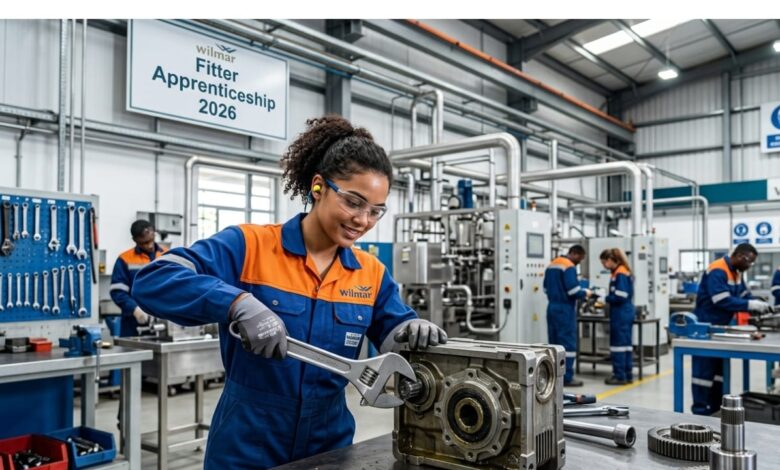
The programme is designed to train candidates to become qualified Fitters through a combination of:
- Theoretical training at accredited institutions
- Practical workplace experience
- Structured trade skills development
It focuses on building long-term technical capability in mechanical maintenance and engineering environments.
This makes it ideal for candidates who prefer practical, hands-on learning and want a career in technical trades.
Who Should Apply for This Apprenticeship?
This apprenticeship is aimed at South African citizens from previously disadvantaged groups in line with employment equity requirements.
It is suitable for candidates who:
- Have completed Matric
- Have an N3 Engineering Studies qualification
- Are interested in mechanical and technical work
- Can commit to long-term training (4 years)
- Are disciplined and willing to learn
This is not a short-term programme. It requires commitment, consistency, and strong interest in technical development.
Programme Benefits and Support
The Wilmar Apprenticeship Fund provides structured financial and training support to selected apprentices.
Support includes:
- Monthly stipend of R4 434
- Competency-based stipend increases
- Institutional training funding
- Personal Protective Equipment (PPE)
- Toolkit provision
- Meals during training or work activities
This support helps apprentices focus fully on their training and development without major financial pressure.
Minimum Matric Requirements
Applicants must have a Senior Certificate (Matric) with the following requirements:
- English: minimum 50% pass
- Mathematics: minimum 40% pass
- Mathematics Literacy is not accepted
These academic requirements ensure candidates have the basic foundation needed for technical training.
N3 Engineering Studies Requirements
Applicants must also hold a National N3 Certificate in Engineering Studies.
Required subjects include:
- Engineering Science
- Mathematics
- Trade theory (such as Fitting and Machining, Fitting and Turning, or Mechano Technology)
- Technical Drawing or Engineering Drawing and Graphics
All N3 subjects must be passed with at least 50%.
These subjects form the foundation of technical understanding required for the Fitter trade.
Why N3 Engineering Studies Is Important
The apprenticeship focuses heavily on mechanical systems, workshop processes, and technical precision.
N3 Engineering Studies helps candidates understand:
- Mechanical systems
- Workshop safety
- Technical drawings
- Measurements and accuracy
- Engineering theory
Applicants should clearly highlight these subjects in their CV so recruiters can easily confirm eligibility.
What Documents Are Required?
Applicants must prepare and submit certified documents, including:
- Updated CV
- Certified copy of South African ID
- Certified Matric certificate
- Certified N3 statement of results
All documents must be clear, valid, and readable to avoid delays or rejection.
Pre-Employment Screening Process
Shortlisted candidates may undergo several checks, including:
- Medical fitness assessment
- Criminal background checks
- Qualification verification
- Reference checks
These checks ensure candidates are suitable for a safe and regulated technical environment.
Why Safety Matters in This Apprenticeship
Fitter apprentices work with tools, machinery, and mechanical systems. Because of this, safety is a core part of the training process.
Apprentices must:
- Follow safety instructions
- Use PPE correctly
- Handle tools responsibly
- Work carefully around machinery
A strong safety mindset is essential for success in this programme.
Skills You Will Develop
During the 4-year apprenticeship, candidates can develop valuable technical and workplace skills such as:
- Mechanical fitting skills
- Tool handling and maintenance
- Technical drawing interpretation
- Measurement and precision
- Problem-solving ability
- Workshop discipline
- Safety awareness
- Team collaboration
- Workplace communication
These skills support long-term career growth in engineering and artisan trades.
How to Strengthen Your Application
A strong CV should clearly highlight your technical background and readiness for apprenticeship training.
Include:
- Matric subjects and results
- N3 Engineering Studies subjects and results
- Any technical or workshop experience
- School or college practical projects
- Safety training (if available)
- References (if available)
Insider Tip
Place your Mathematics, English, Engineering Science, and trade theory results near the top of your CV. Recruiters must be able to quickly confirm that you meet the requirements.
How to Apply
Applications must be submitted through the official online application portal.
Before applying, ensure that:
- All documents are certified
- Subject results are clearly visible
- Your CV is updated and structured
- Contact details are correct and active
Careful preparation improves your chances of being shortlisted.
Application Closing Date
- Closing Date: 19 August 2026
Applicants are encouraged to apply early to avoid delays in document preparation and online submission issues.
What Happens After Applying?
If shortlisted, candidates may be contacted for further assessments or interviews.
Applicants who do not receive feedback within two weeks after the closing date should consider their application unsuccessful, but should continue applying for other apprenticeship opportunities.
Final Thoughts
The Wilmar Fitter Apprenticeship 2026 is a valuable opportunity for candidates who want to enter the technical trades sector through structured, long-term training.
With a 4-year development programme, monthly stipend, institutional training, PPE support, and hands-on workplace experience, it provides a strong foundation for a career as a qualified Fitter.
Applicants who meet the Matric and N3 requirements should prepare their documents early and apply before the closing date.
